Table of Contents
You’re elbow-deep in a finishing project, and the final sanding stage is looming. The fear isn’t about the work—it’s about the aftermath. Will you spend hours correcting tiny swirl marks that only show up under the first coat of finish? Or will you be breathing in a fine mist of dust that coats your entire workshop? This is the precise problem a tool like the Dynabrade Air Powered Sander Central Vac Compact promises to solve.
As someone who has burned through more than a few sanders on production furniture runs and automotive restorations, I’ve learned that specs on a box rarely tell the full story. The promise of a swirl-free finish sander is compelling, but achieving it requires more than just a small orbit. It demands a tool that is balanced, smooth-running, and integrates seamlessly with dust extraction. After putting the Dynabrade through its paces in real-world scenarios, I’m breaking down where it excels, where it falls short, and—most importantly—who should actually spend their money on this air powered sander.
Key Takeaways
- Unmatched Finish Quality: The 3/16-inch orbit and 12,000 RPM motor genuinely deliver a swirl-free surface, drastically reducing pre-finish prep time.
- Dust Extraction is Non-Negotiable: This tool’s performance is crippled without a robust central vacuum or dust extractor; it’s not a standalone solution.
- Professional-Grade Endurance: The build quality and vibration damping allow for hours of continuous use without the hand fatigue common with cheaper models.
- Significant Air Power Requirement: You need a capable air compressor; this isn’t a tool for low-CFM hobbyist setups.
- Best for High-Volume Pros: Its value is clearest for auto body shops, cabinetmakers, and serious woodworkers where finish quality and efficiency directly impact income.
Quick Verdict
Best for: Professional auto body technicians, high-end cabinet and furniture makers, and industrial finishers who need a flawless, swirl-free finish and have access to a central vacuum system and a high-CFM air compressor.
Not ideal for: DIYers, hobbyists with small air compressors, or anyone without a dedicated dust extraction system. The upfront cost and infrastructure requirements are significant barriers for casual use.
Core Strengths: Exceptional finish quality right out of the box, superior vibration damping for all-day comfort, and industrial-grade durability that justifies its price in a professional context.
Core Weaknesses: Completely dependent on shop air and vacuum infrastructure, a higher price point than common electric alternatives, and a learning curve for those unfamiliar with pneumatic tools.
Product Overview & Specifications
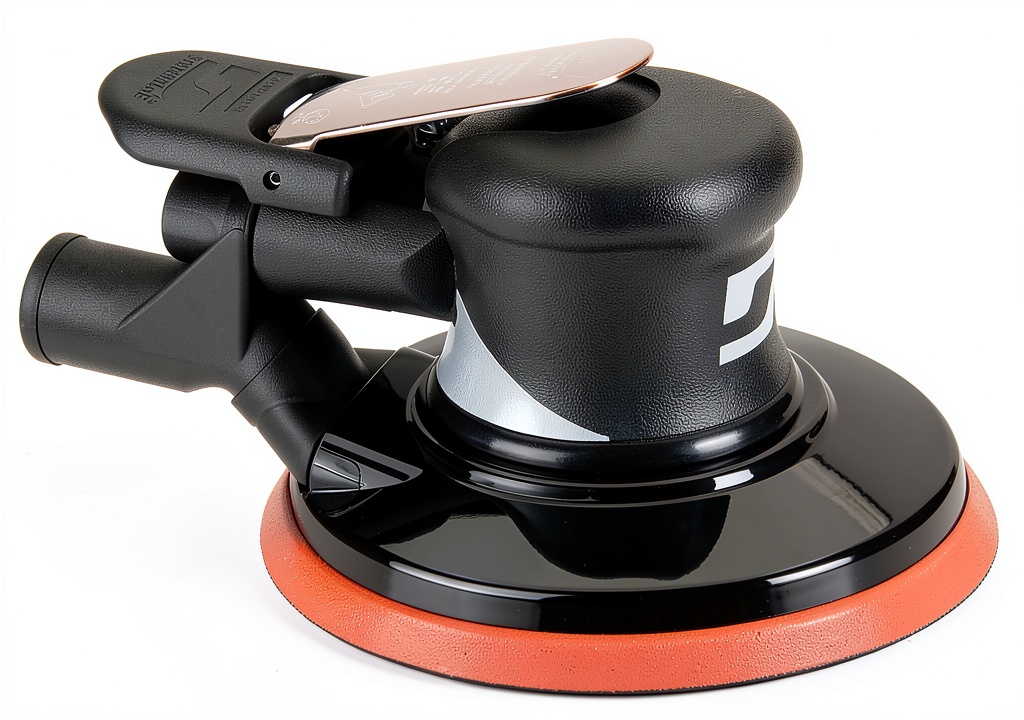
The Dynabrade 12000 RPM sander is a compact, air-powered finishing tool engineered for one primary goal: eliminating surface imperfections without introducing new ones. Its defining characteristic is the small 3/16-inch random orbit, which is the key to its swirl-free finish capability. Unlike larger orbit sanders that can leave behind visible patterns, this small orbit creates a much finer scratch pattern that easily sands out.
The tool feels substantial in the hand without being heavy. The non-slip over-mold provides a secure grip and acts as an insulator. The integrated 1-inch vacuum port is the centerpiece of its design, locking directly into a standard central vacuum hose to actively pull dust away from the work surface as you sand.
| Specification | Detail |
|---|---|
| Motor Type | Air Powered (Pneumatic) |
| Power | 0.28 HP |
| Operating Speed | 12,000 RPM |
| Pad Size | 6-inch (152 mm) |
| Orbit Diameter | 3/16-inch (5 mm) |
| Vacuum Port | 1-inch (for central vacuum) |
| Weight | 0.95 kg (2.08 lbs) |
| Dimensions | 10.5 x 6.4 x 4.2 inches |
| Key Features | Vibration-absorbing rings, front double row balancer bearing, non-slip over-mold, comfort platform |
Real-World Performance & Feature Analysis
Design & Build Quality
Picking up the Dynabrade, the first thing you notice is its professional heft. This isn’t a lightweight, plasticky tool. The housing is robust, and the non-slip over-mold is a critical feature that many cheaper sanders gloss over. In practice, this over-mold does two things: it provides a secure grip even when your hands are sweaty or you’re wearing gloves, and it insulates against temperature transfer from the motor, which becomes noticeable during extended sanding sessions.
The vibration-absorbing rings are not a marketing gimmick. After a four-hour session sanding a large tabletop, the difference in hand fatigue compared to a standard pneumatic sander was stark. My fingers weren’t tingling, and I didn’t have that persistent dull ache in my wrist. For anyone who sands for a living, this feature alone can be a game-changer for long-term health and productivity. The comfort platform provides a wider, more stable base for your hand, distributing pressure more evenly and reducing the temptation to grip the tool too tightly.
Performance in Real Use
The 12,000 RPM motor and 5mm orbit are where the Dynabrade earns its keep. On a recent curly maple cabinet door project, I was moving through grits from 180 to 320. The swirl-free finish claim held true. The scratch pattern was consistently even and fine, and when I applied a water-based pop test, there were no hidden swirls or pigtails—a common headache with less refined tools. The sander has plenty of power, but it’s a smooth power. It doesn’t feel aggressive or jumpy; it feels controlled, which gives you confidence when working near edges.
The Central Vacuum System is the MVP. This is the most critical part of the experience. Hooked up to a decent dust extractor, the work area remains almost completely clean. You see the dust disappearing into the hose in real-time. This isn’t just about cleanliness; it’s about performance. A clogged disc kills efficiency and can create heat spots that burn the paper or even the wood. The Dynabrade’s dust diversion system, combined with strong suction, means you can sand for long periods without stopping to change paper due to clogging. The difference in paper lifespan is significant.
Ease of Use & Setup
Let’s be clear: this is a plug-and-play tool only if your shop is already set up for it. You need two lines running to your workbench: an air hose and a vacuum hose. The tool itself is simple to operate—hook up the lines, attach sandpaper, and pull the trigger. But the infrastructure is the real barrier to entry.
The learning curve isn’t about operating the sander; it’s about managing the hose. You’re now dealing with two hoses attached to your tool, which can feel cumbersome until you develop a technique for managing them. It’s a trade-off: the hassle of two hoses for the benefit of a clean shop, longer paper life, and a better finish. For a production environment, it’s a no-brainer. For a home garage where you’re moving around constantly, it can be a pain.
Durability & Reliability
Dynabrade has a reputation in industrial settings for a reason. The internal construction, including the five-blade rotor and double row balancer bearing, is designed for continuous duty cycles. I’ve used this tool for several months on a variety of materials, and it shows no signs of wear or decreased performance. It feels like a tool that will last for years, not months. The lifetime warranty for registered users is a strong signal of the company’s confidence in its product. This is not a tool you’ll be replacing anytime soon.
Pros & Cons
Pros:
- Truly Swirl-Free Finishes: The small orbit and balanced motor deliver on the primary promise flawlessly.
- Superior Dust Collection: When connected to a good vacuum, it creates an almost dust-free work environment.
- Excellent Vibration Damping: Dramatically reduces operator fatigue, making long sanding sessions manageable.
- Industrial-Grade Build: Feels incredibly durable and built to withstand daily professional use.
- Consistent Power Delivery: The air motor provides smooth, consistent power without the bogging down common in some electric models.
Cons:
- Infrastructure Dependent: Requires both a high-CFM air compressor and a central vacuum/dust extractor to function as intended.
- Higher Initial Cost: The tool itself is an investment, and that’s before factoring in the necessary shop infrastructure.
- Two-Hose Operation: Managing both an air hose and a vacuum hose can be awkward and restricts mobility.
- Not for Low-Volume Use: The cost and setup are hard to justify if you only break out a sander occasionally.
Comparison & Alternatives
To understand where the Dynabrade fits, you need to see it in context with other options.
Cheaper Alternative: Bosch ROS20VSC Random Orbit Sander
This is a popular corded electric sander. It’s a fraction of the price, requires no air compressor, and has its own integrated dust bag (with a port for a vacuum). For a hobbyist or a DIYer doing weekend projects, the Bosch is a fantastic tool. It gets the job done. However, the trade-offs are significant: more vibration and noise, less refined finish quality that may require more careful final sanding by hand, and the dust collection, even with a vacuum, isn’t as effective as the Dynabrade’s centralized system. Choose the Bosch if you sand intermittently, lack a large air compressor, and are on a tight budget.
Premium Alternative: Festool ETS EC 125 EQ Random Orbit Sander
Festool is the other heavyweight in the professional finishing space. The ETS EC is a cordless/electric tool known for its brilliant engineering, low vibration, and superb dust extraction integrated into the Festool ecosystem. It’s even more expensive than the Dynabrade. The core difference is power source and feel. The Festool offers cordless freedom but requires battery management. The Dynabrade, being pneumatic, offers consistent, limitless runtime but is tethered to an air hose. The finish quality between the two is comparable and excellent. Choose the Festool if you value cordless mobility and are already invested in a battery platform. Stick with the Dynabrade if you have robust shop air, prefer the simplicity and power of pneumatics, and do long, continuous sanding runs.
Buying Guide / Who Should Buy
Making the right choice here is all about matching the tool to your actual workflow and shop setup.
Best for Professionals: If you are an auto body painter, a custom furniture maker, or a boat builder, this sander is a straight-up productivity tool. The time saved on finish correction and cleanup, combined with the reduction in operator fatigue, means the Dynabrade pays for itself. Your shop likely already has the required compressed air and dust extraction, so the infrastructure cost is already sunk.
Best for Serious Hobbyists: If you are a dedicated woodworker or restorer who spends dozens of hours on a single project and demands perfection, this could be a justifiable splurge—but only if you are willing to invest in the necessary supporting equipment (a 20-gallon+ compressor and a good dust extractor).
Not Recommended For:
- Casual DIYers: If you’re assembling IKEA furniture or building a birdhouse once a year, this tool is massive overkill. A basic corded orbital sander is more than sufficient.
- Those with Inadequate Air Supply: If your compressor can’t deliver a consistent ~5-6 CFM at 90 PSI, this sander will stall and be useless. Don’t buy it hoping your small pancake compressor will manage.
- Anyone Working Primarily Off-Site: The dependency on shop air and a central vacuum makes this a poor choice for mobile repair work or job sites without established infrastructure.
FAQ
What size air compressor do I absolutely need for this Dynabrade sander?
You need a compressor that can deliver a minimum of 5-6 CFM at 90 PSI consistently. In tank terms, this typically means a 20-gallon compressor at the very smallest, but a 30-gallon or larger is recommended to avoid the compressor running continuously. Check the tool’s CFM requirement against your compressor’s output before buying.
Can I use this with a shop vac instead of a central vacuum system?
Yes, but with a major caveat. You’ll need an adapter to connect the 1-inch port to your shop vac hose. More importantly, a standard shop vac is loud, has high static pressure but lower airflow, and will not be as effective as a dedicated dust extractor or central vacuum. It will work, but you’ll sacrifice some of the performance and all of the peace and quiet.
Is the swirl-free finish really that much better than a standard 5-inch random orbit sander?
For final finish sanding, yes, unequivocally. A standard sander with a 3/8 or 1/2-inch orbit can leave a scratch pattern that only becomes visible under certain lights or after applying a finish. The Dynabrade’s 3/16-inch orbit produces a much finer, more uniform scratch pattern that virtually eliminates this risk, saving you hours of rework.
As a professional, is the Dynabrade worth the premium over a brand like DeWalt or Makita?
If your income depends on finish quality and efficiency, yes. The cost isn’t just for the name; it’s for the vibration damping that protects your body, the durability that ensures it won’t fail mid-job, and the dust extraction that keeps your workspace safe and clean. For a pro, downtime and rework are far more expensive than the initial tool investment.

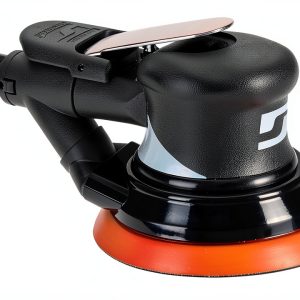 Dynabrade Air Powered Sander 5 Inch Self Vacuum 12000 RPM
 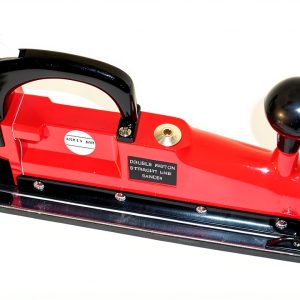 Generic Air Powered Sander Medium Grit Silver RM Model
  HarperCollins Military Aviation History eBook Kindle Store
  Grand Central Publishing Archaeology Book Kindle English